If you are home shopping in Larchmont, style is not just about curb appeal. In a village shaped by development from the 1890s through the 1930s, plus postwar building and later infill, architecture can tell you a lot about how a home may live, what it may need, and how it may fit your budget. Understanding the most common Larchmont home styles can help you look past first impressions and make a more confident decision. Let’s dive in.
Why home style matters in Larchmont
Larchmont is a compact village of about 1.1 square miles, and its housing stock reflects a long arc of development. The Village of Larchmont historic resource survey shows strong building waves from the 1890s through the 1930s, followed by postwar homes and a smaller amount of contemporary infill after 1970.
That matters because the style of a house often gives you clues about its age, layout, materials, and upkeep. In Larchmont, some homes are genuinely quite old. The Larchmont Historical Society treats pre-1909 houses as "Century Homes," which is a useful reminder that older homes here are not simply designed to look historic.
For buyers, that means style can influence more than taste. It can affect how formal or open a home feels, how much maintenance to expect, and how much flexibility you may have for updates over time.
Larchmont's main home style eras
Larchmont's streetscape makes more sense when you view it by era. Each major building period left behind a different set of priorities and design choices.
1890s resort-era homes
The 1890s were a major boom period in Larchmont Manor. The village survey notes that Shingle Style was especially prominent during this phase and was seen at the time as the preferred design for the better houses in the subdivision.
These homes still shape some of the village's most distinctive streets. If you are drawn to houses with strong character and an older coastal-resort feel, this is one of the key eras to know.
Early 1900s Colonial growth
In the early 1900s, Colonial Revival arrived in large numbers. The local survey identifies common forms including Cape Cod, Two-Story Colonial, Garrison Colonial, and Dutch Colonial Revival.
This period helped define the classic suburban look many buyers still want today. These homes often balance historic character with more straightforward forms that can feel easier to adapt over time.
1920s and 1930s Tudor expansion
By the 1920s and 1930s, English Revival and Tudor-style homes became a major part of the village. According to the survey, Larchmont Manor includes larger and more elaborate examples from this period.
These homes tend to stand out for their atmosphere and detail. They are often the houses buyers remember most after a showing.
Postwar and newer homes
After World War II, Larchmont added more Cape Cod, Split-Level, and Ranch homes. Later development after 1970 was mostly infill and generally contemporary, according to the village survey.
These homes often appeal to buyers who care more about practical layouts and renovation quality than period architecture. In a market like Larchmont, that can be a major advantage depending on your priorities.
Colonial homes in Larchmont
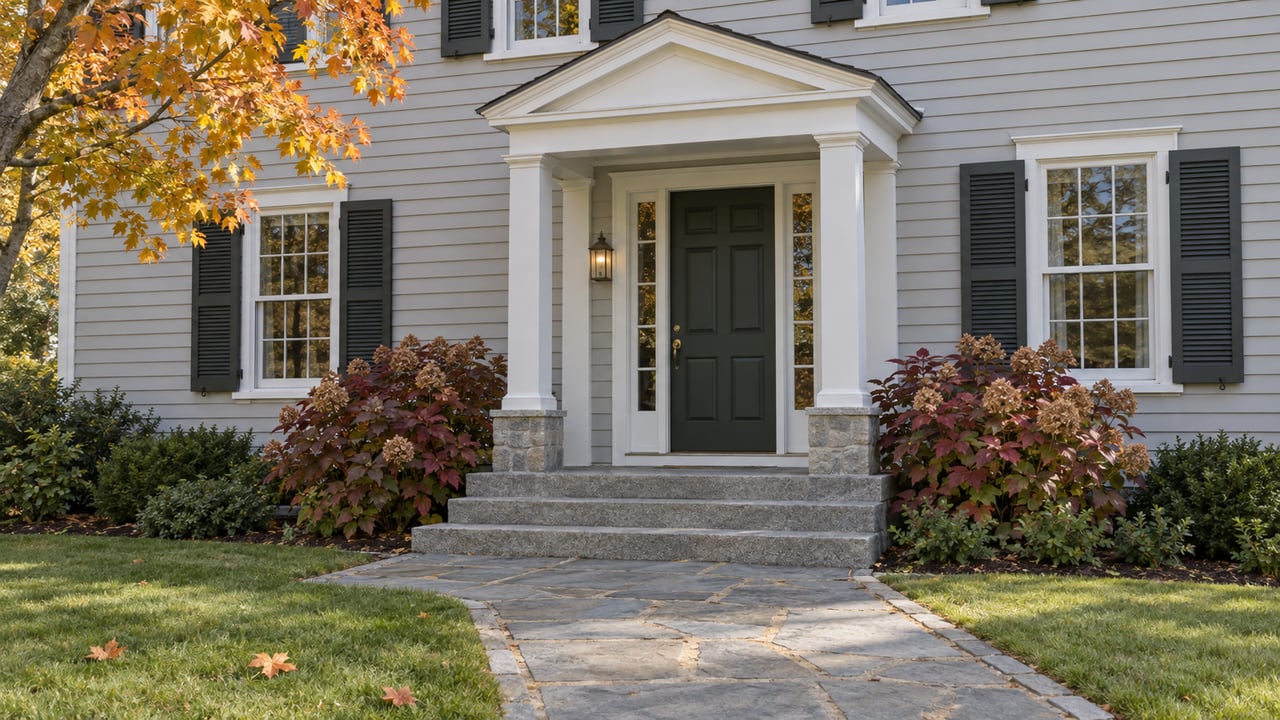
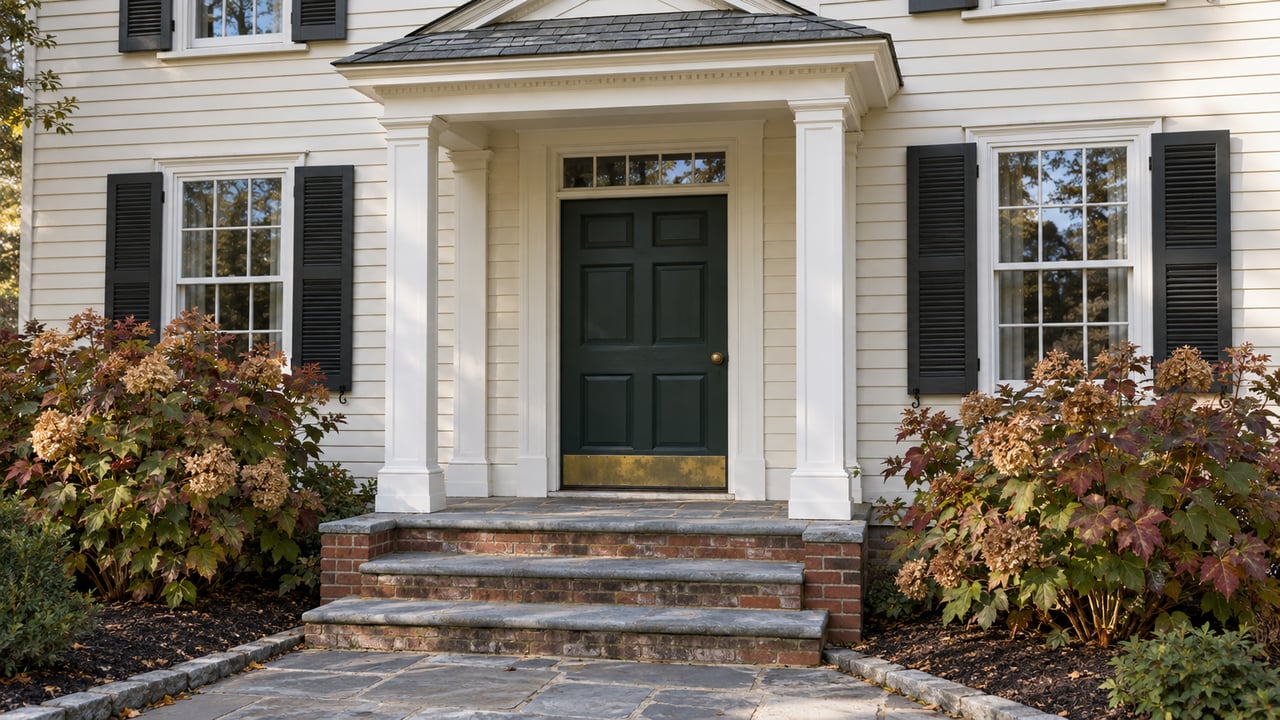
Colonial Revival is one of Larchmont's most enduring styles. The National Park Service describes it as a symmetrical style that often includes hipped or gabled roofs, pronounced entries, columns or pilasters, and multi-pane windows.
In day-to-day living, Colonials often feel balanced and predictable. That can be a plus if you want a layout that is easy to understand and easier to furnish.
From a buyer's perspective, this style is often one of the most adaptable. Based on its symmetry and clean massing, Colonials may be easier to expand or modernize than more complex styles. Maintenance also tends to center on trim, rooflines, windows, and porch details rather than highly specialized ornament.
Tudor and English Revival homes
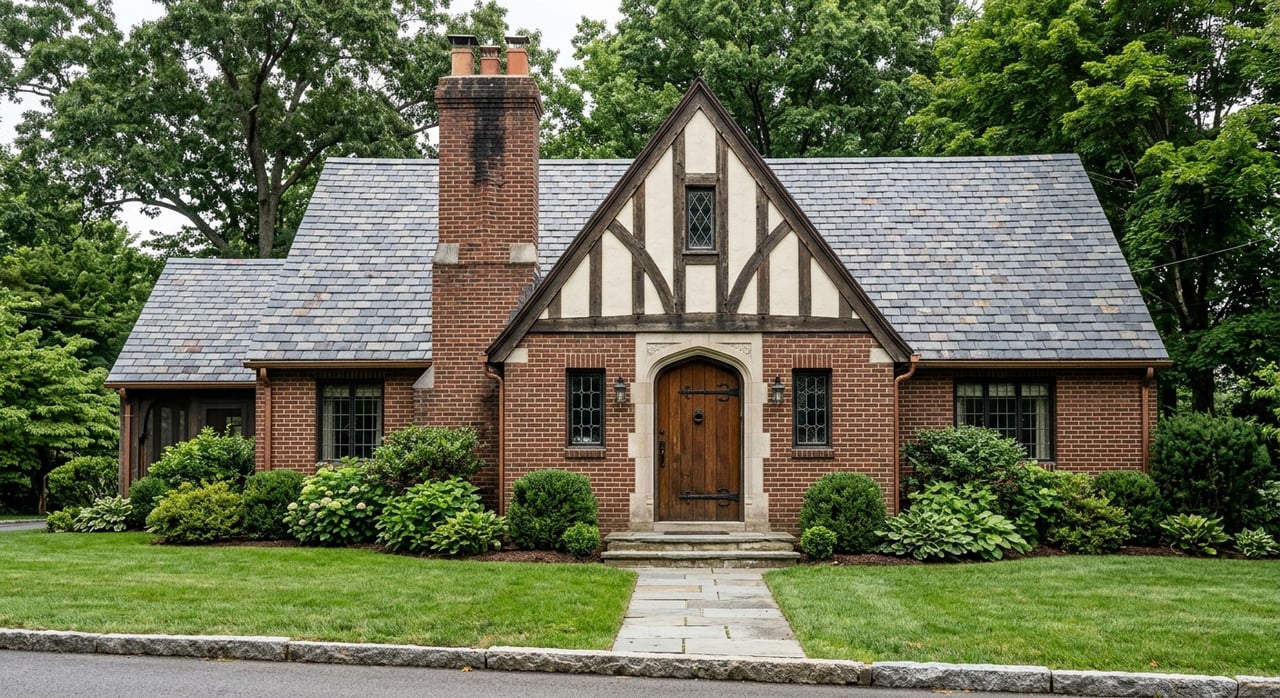
When buyers in Larchmont talk about Tudor homes, they are often thinking of the village's 1920s-era picturesque houses. Tudor Revival is typically marked by steep roofs, cross gables, prominent chimneys, narrow multi-pane windows, gabled entries, and patterned brick or stonework.
These homes deliver a strong sense of atmosphere. If you want a house that feels cozy, distinctive, and full of old-world character, Tudor homes often check that box.
The tradeoff is usually upkeep and layout. Based on the style's rooflines, chimneys, masonry, and mixed exterior materials, maintenance can be more involved than it is with a simpler Colonial or Ranch. Interiors may also feel more compartmentalized than what you would find in many newer homes.
Shingle Style homes
Shingle Style is one of Larchmont's signature architectural looks, especially in the older Manor streetscape. This style often features shingles on both roofs and walls, asymmetrical facades, irregular roof lines, wide porches, and small multi-pane windows.
These homes often carry a strong sense of place. The village survey ties them directly to the 1890s boom in Larchmont Manor and notes that they were viewed as the better-house option in that subdivision.
For buyers, that can mean real architectural distinction. It can also mean more involved upkeep if original or high-quality wood shingles, porch details, and complex rooflines remain in place. If you love character, these homes can be compelling, but they usually reward buyers who go in with clear eyes about maintenance.
Cape Cod, Ranch, and Split-Level homes
Postwar homes in Larchmont include Cape Cod, Ranch, and Split-Level designs. These styles are generally less ornate and more practical than many earlier homes in the village.
Cape Cod homes are usually one-and-a-half stories with steep roofs and dormers. Ranch homes are lower, more horizontal, and commonly associated with more open floor plans. Split-Levels separate living, sleeping, and garage space across multiple short levels.
For many buyers, these homes are easier to live in day to day. Ranches and many updated postwar homes can feel especially straightforward, while Split-Levels often work well when you want activity separated by floor. If your focus is usable space over architectural pedigree, these styles may deserve a closer look.
What style can tell you about layout
Home style is not a perfect predictor of layout, but it can offer useful clues before you even step inside. In Larchmont, those clues matter because the housing stock spans several different building eras.
In general:
- Colonials often feel more formal and symmetrical
- Tudors often have more distinct rooms and transitions
- Shingle homes can feel less formal outside but still complex inside
- Ranches often feel more open and casual
- Split-Levels often create separation between different uses of the home
If you know how you like to live, style can help you narrow your search faster. Some buyers want open flow and simple circulation, while others are happy to trade convenience for charm and atmosphere.
What style can mean for maintenance
In Larchmont, exterior complexity often tracks with maintenance. That is especially important in a village with a meaningful share of older homes.
As a simple rule, homes with steep roofs, multiple chimneys, masonry, wood shingles, decorative trim, and porch systems often require more attention than simpler postwar houses. That does not make them a bad choice. It just means you should budget time and money accordingly.
When evaluating older homes, pay close attention to features that are common in Larchmont's historic styles, including:
- Roofs and flashing
- Chimneys
- Windows
- Porch systems
- Wood trim
- Masonry
- Prior additions
A home's style does not tell you its condition, but it often tells you where condition issues are more likely to show up.
How style can affect renovation plans
Style also matters if you are thinking about updates. Some homes are simply easier to change than others.
Based on the architectural forms described in the research, symmetrical Colonial homes are often the easiest to enlarge or reconfigure. Highly detailed Tudor and Shingle homes may need more sensitive updates if you want to preserve the features that give them value and appeal.
That does not mean one style is better. It means your renovation goals should match the kind of house you are buying. If you want a turnkey home with fewer design decisions, one style may fit better. If you want a long-term project with character, another may be more rewarding.
How style fits into Larchmont pricing
In Larchmont, style matters, but it rarely acts alone. The village survey shows that Shingle Style was tied to the better houses of the early Manor, that Colonial Revival included more modest and affordable forms, and that English Revival homes in the Manor were often larger and more elaborate.
At the same time, current market snapshots suggest Larchmont is a high-price, competitive village overall. Median sale or list pricing has recently fallen in roughly the $1.45 million to $1.58 million range, and homes often go pending in about 11 to 32 days, depending on the data source and methodology.
For buyers, the takeaway is simple. You are usually paying for the full package, not just the style label. Condition, lot, layout, location, and the quality of updates often matter just as much as architectural pedigree.
An updated Colonial may offer stronger total value than a charming but tired Tudor. On the other hand, a well-preserved Shingle or English Revival home may justify a premium if original details remain intact and the home has been thoughtfully maintained.
How to shop by style more strategically
If you are serious about buying in Larchmont, it helps to match style with your real-life priorities instead of your initial emotional reaction. A beautiful facade matters, but living in the house matters more.
Ask yourself:
- Do you want formal rooms or more open flow?
- Are you comfortable with older-home upkeep?
- Do you value architectural character more than simplicity?
- Are you planning a renovation in the next few years?
- Do you want a home that feels distinctive or easy to maintain?
The right answer depends on your lifestyle, not on a universal ranking of styles. In a village with this much architectural variety, clarity around your priorities can save you time and help you act faster when the right home appears.
Larchmont offers a rare mix of historic charm, postwar practicality, and competitive suburban demand. If you understand what each style usually means before you tour, you can make smarter comparisons and avoid paying for features that do not actually serve your goals.
If you want help evaluating home styles, layout tradeoffs, and value in Larchmont or across Westchester, connect with Stephen Mele for clear, data-informed guidance tailored to your move.
FAQs
What home styles are most common in Larchmont, NY?
- Larchmont buyers are most likely to encounter Colonial Revival and Colonial homes, Tudor or English Revival homes, Shingle Style homes, and postwar Cape Cod, Ranch, and Split-Level homes.
What does a Colonial home usually mean for a Larchmont buyer?
- In Larchmont, a Colonial often suggests a symmetrical exterior, a more formal layout, and a home that may be easier to expand or modernize than more complex historic styles.
What should buyers know about Tudor homes in Larchmont?
- Tudor homes in Larchmont often offer strong character, steep rooflines, masonry, and prominent chimneys, but they may also involve more exterior upkeep and more compartmentalized interiors.
Are Shingle Style homes in Larchmont older homes?
- Many Shingle Style homes in Larchmont are tied to the village's 1890s development boom in Larchmont Manor, so buyers should expect true age and architectural detail rather than just a historic look.
Are Ranch and Split-Level homes easier to live in than older Larchmont homes?
- Many buyers find Ranch and Split-Level homes easier for daily living because they are often more practical, less ornate, and simpler in circulation than some older Tudor or Shingle homes.
Does home style affect price in Larchmont, NY?
- Yes, but usually as part of a bigger picture that includes condition, lot, layout, location, and renovation quality, not just the architectural style alone.