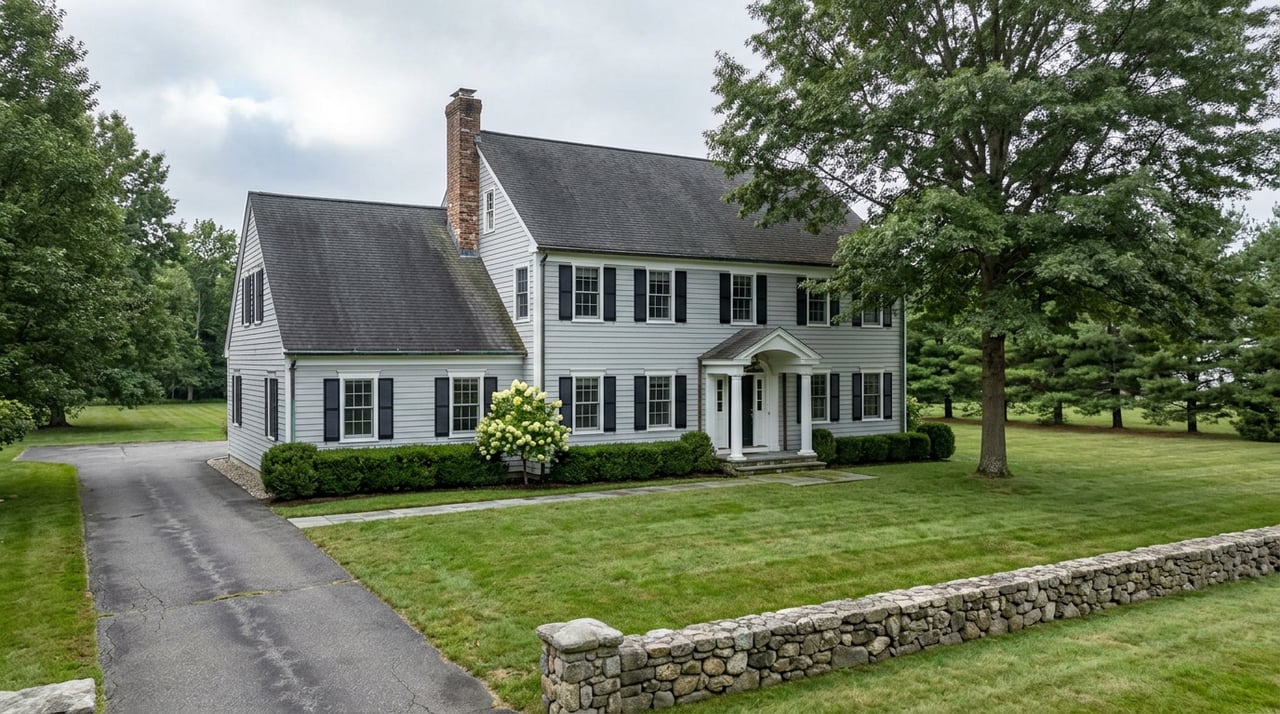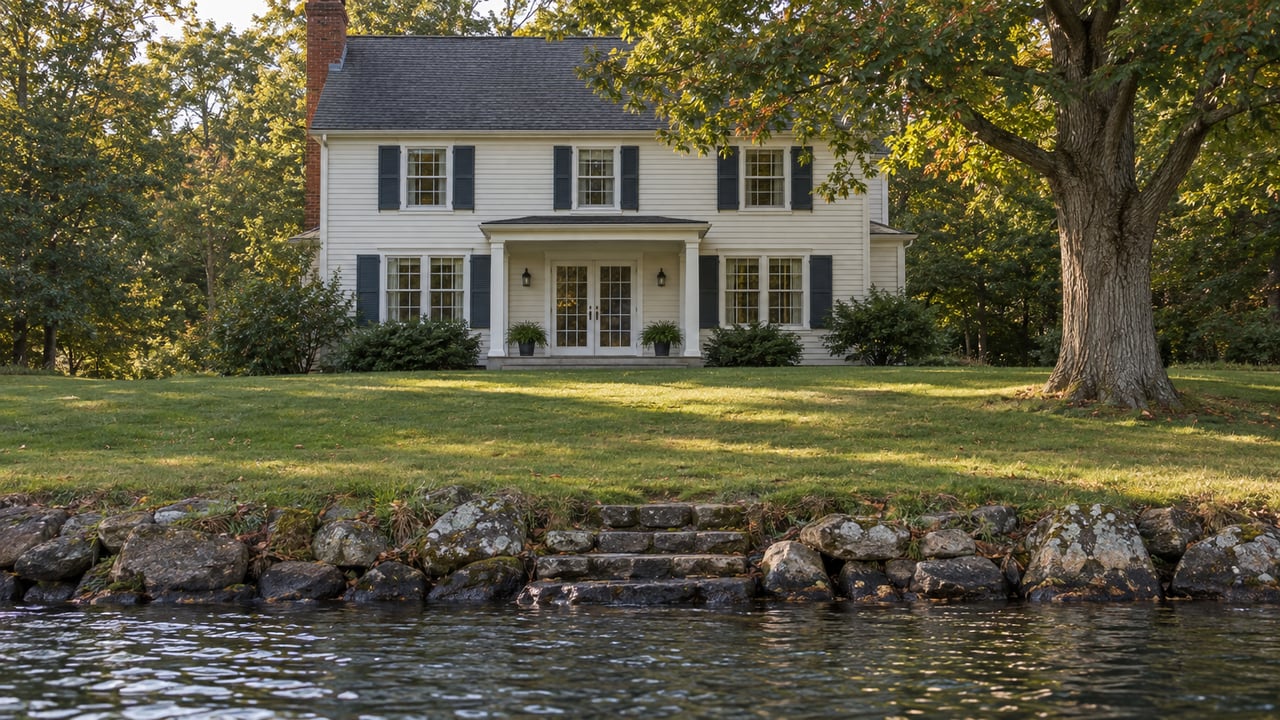
Two homes near the same stretch of shoreline in Brookfield can both carry the word "waterfront" in their listing copy and still mean two very different things once you own them. One might come with a dock that's existed since before FirstLight Power owned the lake bottom beneath it. The other might come with a shared beach and a spot on an association waiting list, with no shoreline rights attached to the parcel at all. The price gap between those two outcomes has less to do with square footage than with a legal detail almost nobody checks until it's too late to matter: where the deed actually stops.
Candlewood Lake is Connecticut's largest lake, and Brookfield holds a meaningful share of its eastern shore. But the lake itself isn't owned by the homeowners who live along it. It's owned by FirstLight Power, and that single fact reshapes what "buying on the water" actually delivers.
The Line Most Owners Have Never Seen
Candlewood Lake wasn't formed by nature. It was built in the 1920s as a reservoir for the Rocky River Pumped Storage Station, flooding the old Rocky River basin to store water for hydroelectric generation. Connecticut Light and Power owned the lake for decades before selling it to FirstLight Power Resources in June 2006. FirstLight still owns it today, along with most of the shoreline around it.
That ownership creates a boundary line that runs through nearly every waterfront parcel on the lake. The Candlewood Lake Authority calls it the Rocky River Project Boundary, though most longtime owners still know it by its older name: the 440 line, set at the 440-foot elevation mark. According to the Authority, roughly 95 percent of Candlewood Lake waterfront owners hold a deed that stops at that boundary and does not extend below it. Walk from the house toward the water and at some point, often well before you reach the shoreline, you cross from your own property onto FirstLight's.
The line doesn't always track a clean, visible edge. The Authority notes that it does not follow the 440-foot elevation contour in every location, which means the only reliable way to find it on a specific parcel is a land survey. For a buyer, that's the first practical implication: the listing photo of a lawn running down to a dock does not tell you where your ownership actually ends. A survey does.
Everything below that line, the strip of shoreline, the water, the lake bottom, and anything growing or built on it, belongs to FirstLight. That includes existing docks, seawalls, and vegetation. Any change below the boundary, from pruning a tree to replacing a dock, requires a permit through FirstLight's land management process, not just local approval. Skip that step and the consequence isn't a warning letter. It's a cease and desist order, a requirement to restore what was altered, and in some cases a fine.
A Patchwork of Private Communities, Not One Lake
The boundary line explains what lies below the water's edge. It doesn't explain why one Brookfield lake neighborhood can differ so sharply from another a half mile away.
Candlewood Lake touches five towns, Brookfield, Danbury, New Fairfield, New Milford, and Sherman, and within those towns the shoreline is carved into a large number of distinct private communities, each with its own name, its own association, and its own rules. On the Brookfield side alone, names like Arrowhead Point, Candlewood Acres, Candlewood Birches, Candlewood Lake Club, Candlewood Orchard, Candlewood Shores, and Hickory Hills mark separate pockets of the shoreline, each governed independently. Across the full lake, more than five dozen of these communities exist, and no two structure lake access identically.
That matters because "lake access" on Candlewood isn't a single product. Depending on the community and the parcel, a home can carry:
| Rights bundle | What it typically includes | What it doesn't |
|---|---|---|
| Direct frontage with deeded dock rights | Land up to the project boundary, a registered dock, private shoreline use | Ownership below the boundary line itself |
| Association deeded access | A shared beach, mooring field, or community dock through the HOA | A private dock at the home, guaranteed slip availability |
| Off-water association membership | Use of community recreational amenities | Any shoreline rights or lake frontage |
The same asking price range can land you in any one of these categories, and the difference only becomes obvious once you're reading the actual deed and the association's governing documents rather than the marketing description. A dock right that reads as automatic in one community might require a separate application, a fee, and a waiting period in the next one over.
The Calendar Nobody Puts in the Listing
Even for buyers who land on a parcel with clean deeded dock rights, the lake itself doesn't stay in one shape year-round. FirstLight draws Candlewood down every winter, and the schedule is a working part of owning here, not a footnote.
This year's drawdown across FirstLight's Housatonic River lakes begins in mid-October, with Lake Zoar's drawdown starting first and aiming to return to normal levels by late October. Candlewood's own deep drawdown season typically starts after November 1, timed to weather conditions, and the lake isn't brought back to summer operating levels until shortly before Memorial Day. FirstLight has said publicly that warmer, wetter winters have been pushing the start of the Candlewood drawdown later in recent years, which means the exact date shifts from one season to the next.
The drawdown isn't cosmetic. It's done in consultation with the Connecticut Department of Energy and Environmental Protection and the U.S. Fish and Wildlife Service, and it serves a real purpose: exposing invasive plants and zebra mussels to freezing air, and giving FirstLight access to the dam and pumps for maintenance. For homeowners, it means docks, boat lifts, and any shoreline structure need to come out before the season starts or risk ice damage, and any shoreline work planned during that window still needs a FirstLight permit first.
The 2025-2026 season made the point sharply. FirstLight had planned a shallow drawdown, targeting a smaller drop in water level than usual. Then, on January 31, 2026, the company announced it would draw the lake down as much as four feet lower than planned, not for lake maintenance, but in response to a Department of Energy emergency order tied to a regional cold snap straining the New England power grid. The refill schedule didn't change. The water level did, mid-winter, because of decisions made well outside Candlewood Lake or Brookfield entirely.
That's the part a listing sheet can't capture. The lake a buyer sees in July isn't a fixed feature of the property. It's the visible result of a hydroelectric operation that answers to the grid first and the shoreline second.
What to Ask For Before You Waive Anything
None of this makes buying on Candlewood Lake in Brookfield a bad decision. It makes it a decision that rewards specifics over adjectives. Before writing an offer on a lake-adjacent home here, it's worth asking the seller directly for a few things that a standard listing won't volunteer:
A current land survey showing exactly where the Rocky River Project Boundary falls on the parcel, since the line doesn't reliably track the 440-foot contour everywhere.
Copies of any FirstLight permits tied to an existing dock, seawall, or shoreline structure, confirming the right transfers with the sale rather than needing a fresh application.
The specific association's governing documents for that particular lake community, since dock rights, beach access, and dues structures are set community by community rather than lake-wide.
Whichever of those documents a seller can produce quickly is itself useful information. A seller with the survey and the permit paperwork in hand has usually kept the property in good standing. A seller without them may not know the answer either, which is its own kind of disclosure.
A Few Questions Worth Asking Directly
Does every home on Candlewood Lake have a dock? No. Dock rights depend on the parcel's deed and the community it sits in. Some homes carry deeded dock rights, some access docks only through an association, and some have no shoreline rights at all despite being close to the water.
Who do I contact if I want to change or replace an existing dock? FirstLight, not just the town. Any modification below the Rocky River Project Boundary requires a FirstLight land use permit before local zoning approval comes into play.
Does the water level stay the same year-round? No. FirstLight lowers the lake every winter as part of its annual drawdown, typically starting after November 1 for Candlewood and returning to summer levels before Memorial Day. The exact dates shift with weather, and in some years, like this past winter, regional energy demand can push the level lower than originally planned.
Buying near Candlewood Lake in Brookfield means buying into a set of rights that vary parcel by parcel and a water level that answers to more than the seasons. If you're comparing lake-adjacent listings and want a clear read on what a specific address actually includes before you write an offer, Stephen Mele is glad to walk through it with you.