If you love New York City but want more space, Wilton, CT gives you a quieter, greener home base while keeping Manhattan within reach. You might be weighing train schedules against school calendars and wondering how much house you can get without adding too much time to your day. In this guide, you’ll see realistic commute expectations, a clear housing snapshot, and what daily life feels like between trains, trails, and town events. Let’s dive in.
Wilton at a glance
Wilton is a suburban town in southwestern Fairfield County with a small-town center and a strong community feel. The town spans about 27 square miles and had a population around 18,500 as of the 2020 Census, according to Wilton’s profile. For rail access, residents use two local Metro-North Danbury Branch stops, Wilton and Cannondale, which connect to the New Haven Line at South Norwalk or Stamford depending on the run. You can read more about the branch and station details on the Wilton station page.
Getting to Manhattan: what to expect
If you plan your day around a reliable door-to-door time, treat Wilton to Grand Central as about 75 to 95 minutes for a typical peak trip. That range includes your first mile to the station, a transfer at South Norwalk or Stamford on most runs, and the last mile in the city. Exact timing depends on the train you catch, the connection, and where you work in Manhattan.
Door-to-door timing factors
- The Danbury Branch is a feeder to the main New Haven Line. Most trips involve a transfer at South Norwalk or Stamford.
- Trains on the branch are less frequent than on the main line, so a missed connection can add time.
- First and last mile matter. A quick drive or shuttle to the right station can save minutes every day.
- Always verify your specific trains on the day you travel. Check current timetables and the TrainTime app on the MTA’s schedule updates page.
Frequency and reliability, in plain terms
Service on the branch is single-track in many areas, which limits capacity and can affect frequency. Seasonal maintenance can also lead to temporary bus substitution, as reported in coverage of multi-day Danbury Branch shutdowns for state-of-good-repair work. You can see an example of that kind of maintenance update here. On days when service is reduced or bused, many riders simply drive to South Norwalk or Stamford to pick up more frequent express service.
First- and last-mile options
How you get to the train often makes or breaks your commute. Here are the practical choices many Wilton commuters use:
- Station parking: Wilton station has roughly 200-plus spaces, and Cannondale has about 140 spaces. These are typically administered locally, and rules can vary by lot. For context, see the Wilton station overview.
- Shuttles and local transit: Norwalk Transit redesigned its network in 2025, adding all-day links along the Route 7 corridor and a dedicated connection that ties Wilton Center and Merritt 7 to South Norwalk. That can reduce the need to drive to the station. Explore the new network here.
- Drive to a mainline hub: If minimizing total rail time is your priority, you may prefer driving 10 to 20 minutes to South Norwalk or Stamford to catch more frequent express trains.
Pro tip: If you can, test both patterns for a week before deciding on a neighborhood. Try the local branch connection on some days and a drive to South Norwalk or Stamford on others. Your door-to-door time will tell you which fits your routine.
Housing snapshot: prices and what you get
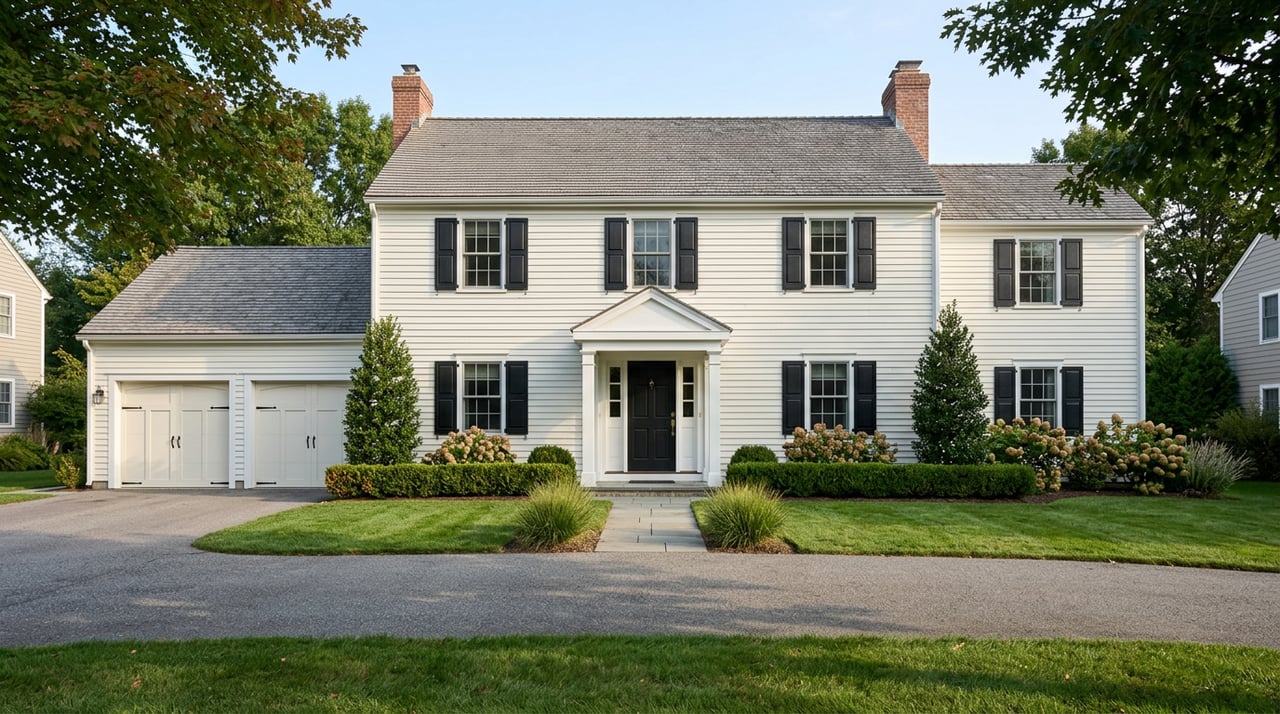
Wilton’s market centers around single-family homes on larger lots with a classic New England look. Across major market data vendors, recent medians generally cluster between about $1.2M and $1.5M. Methodology differs by platform, but the throughline is consistent: pricing firmed up through 2024–2025 as inventory stayed tight. Time to pending often runs faster than national norms, with seasonal swings.
What you can expect to find
- Classic center-hall Colonials and traditional New England styles.
- Mid-century ranches and modernized properties from the 1950s–1970s.
- Larger renovated homes and estate settings in more rural-feeling pockets.
- A smaller mix of condos and apartments near Wilton Center for low-maintenance living.
New near-station housing
If you want a walk-to-train lifestyle, keep an eye on new transit-area development. In 2025, the town approved a 208-unit apartment community near the station area, signaling a push to diversify housing types close to transit. You can read about the approval here. As these homes come online, renters and buyers seeking proximity to the train should have more options.
Lifestyle: schools, parks, and everyday rhythm
Wilton attracts residents who value a suburban pace with access to nature and community events. Wilton Public Schools are a popular draw and receive strong marks in state and national listings. For programs, enrollment, and district updates, visit the Wilton Public Schools site.
Outdoors, you have the Norwalk River Valley Trail segments for running and biking, plus local open space that gives many neighborhoods a wooded, private feel. Art and history meet at Weir Farm National Historical Park, which offers trails and year-round cultural programming. Around Wilton Center, you’ll find a library, shops, restaurants, a seasonal farmers market, and town events that anchor the community calendar.
Local employment also matters for some buyers. Along the Route 7 corridor, the Wilton Corporate Park and nearby offices host a range of employers, which can shorten your daily trip if you split time between the city and local work. Explore the corridor’s business setting on the Corporate Park map.
How Wilton compares for commuters
A simple rule of thumb: the closer you live to the New Haven Line’s main corridor, the faster and more frequent your rail options. Towns on the main line often come with higher home prices. Branch-line towns like Wilton trade a longer rail ride and a transfer on most runs for larger lots, a quieter suburban setting, and, in some areas, lower prices than nearby coastal towns.
If your top priority is an absolute minimum door-to-desk time, you may prefer a mainline town or a drive-and-park routine at South Norwalk or Stamford. If space, privacy, and a residential lifestyle rank higher for you, Wilton’s tradeoff often makes sense.
Property taxes: plan it into your budget
Wilton’s property taxes and mill rate sit above many national averages, reflecting active municipal budgets and the local assessment base common to Fairfield County communities. Review recent local coverage of the FY25 town and school budgets to understand trends and plan your total cost of ownership. You can see a helpful snapshot here.
Is Wilton right for you?
Wilton could be a fit if you want:
- A suburban lifestyle with larger lots and a wooded, private feel.
- A realistic door-to-door commute you can live with most days.
- A community-oriented town center with local events and a strong library.
- Access to trails, parks, and cultural spots like Weir Farm.
- A home base in Fairfield County with options to work locally along Route 7.
Test-drive your commute before you buy
Try this simple plan to get confident about the daily rhythm:
- Map your door-to-door route from a few Wilton neighborhoods at your target departure time.
- Ride the Danbury Branch on a typical weekday morning. Note transfer time at South Norwalk or Stamford.
- On another day, drive to South Norwalk or Stamford and take an express. Compare total time and stress.
- Try the Norwalk Transit link if it fits your schedule. See how it affects your morning.
- Check real-time timetables and the TrainTime app on the MTA site before you decide.
Ready to weigh commute, housing, and lifestyle side by side? Let’s build a plan around your goals and timing. Book a call with Stephen Mele to get neighborhood options, sample commute runs, and on-the-ground pricing insights.
FAQs
How long is the Wilton-to-Grand Central commute on a typical weekday?
- Most buyers plan for about 75 to 95 minutes door to door, depending on the specific train, transfer, and first/last-mile time.
Which Wilton train station should I use: Wilton or Cannondale?
- Choose the station that aligns with your schedule and parking needs; both sit on the Danbury Branch and feed into the New Haven Line via South Norwalk or Stamford.
Is it faster to drive to South Norwalk or Stamford instead of riding the branch?
- Often yes, especially for catching more frequent express trains; test both patterns to see which saves time for your start and end points.
What price range should I expect for a single-family home in Wilton?
- Across major data vendors, recent medians cluster roughly between $1.2M and $1.5M, with tight inventory and competitive conditions.
Are there apartments near the Wilton train station?
- Yes; a 208-unit apartment community near the station was approved in 2025, adding more close-to-transit options as it comes online.
What are Wilton’s public schools known for?
- The district is a frequent draw for families and receives strong marks in state and national listings; review programs and updates on the district site.
What outdoor options are nearby for weekends?
- You’ll find Norwalk River Valley Trail segments, local open space, and Weir Farm National Historical Park for hiking and cultural programs.
How do property taxes affect total ownership costs in Wilton?
- Plan for a higher property tax burden than many U.S. averages; review recent budget and mill rate updates to build accurate monthly estimates.